Herculaneum: the other Vesuvian city
About 20 minutes by train from Pompei, Herculaneum preserves wood, food and frescoes unique in the Roman world, sealed by the pyroclastic flow of 79 AD.
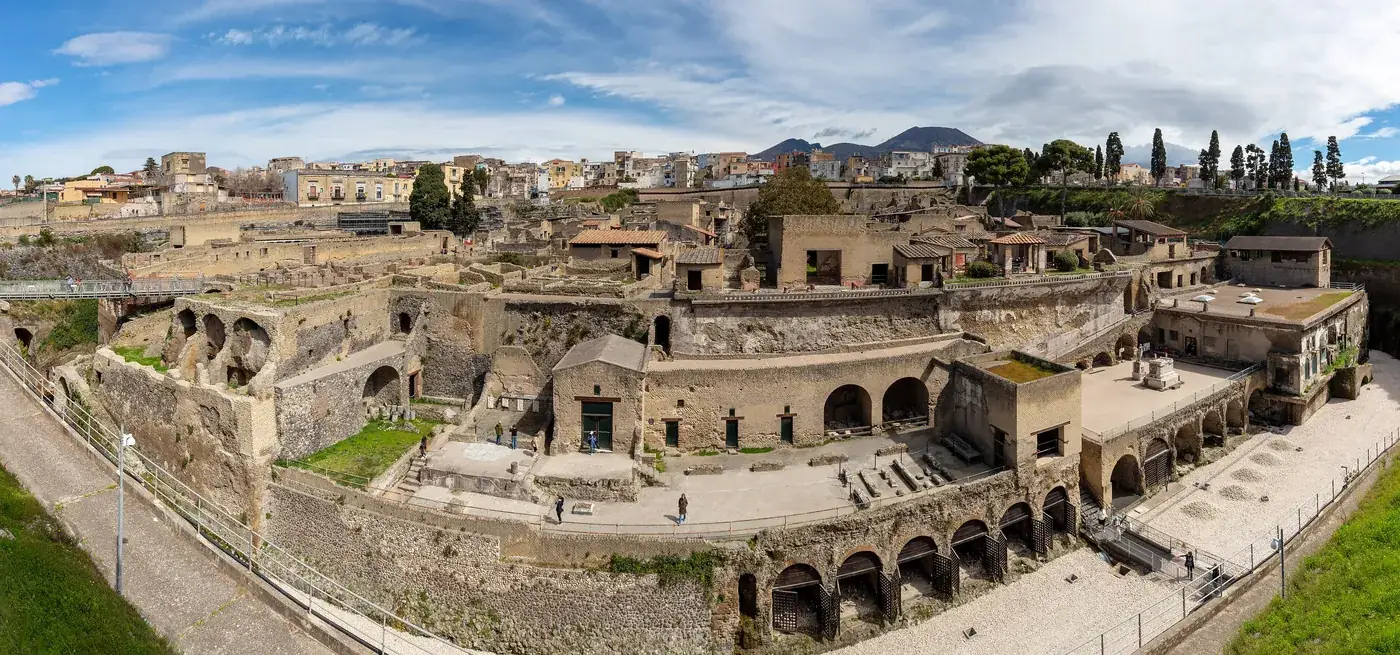
Different from Pompeii
Herculaneum was struck by the eruption differently from Pompeii: a burning pyroclastic flow sealed the city, preserving wood, textiles, food and even wax writing on tablets. The result is a smaller site than Pompeii, but of extraordinary integrity.
What to see
The terraced houses with wooden balconies, the Hall of the Augustals, frescoed dining rooms and the ancient boats kept in the small boat pavilion are the main stops. Above the park, the Villa of the Papyri — source of the library of carbonised scrolls — still awaits renewed excavation.
Getting there
From Pompei station the Circumvesuviana takes about 20 minutes to Ercolano Scavi; from there you descend to the park through the ravine (the Decumano), crossing the modern harbour district. The railway line towards Naples stops in the same town as well.
A well-spent day
Herculaneum takes three to four hours and pairs perfectly with Vesuvius or the Archaeological Museum of Naples. Many visitors give the morning to Pompeii and the afternoon to Herculaneum, with a quick lunch in between.